
Robert Moffatt Presents
Exceptional San Francisco Home
$1,695,000
Property Details
Bedrooms
3
Bathrooms
2
Square Feet
1,637 sq ft
Neighborhood
Noe Valley
DAY
EVENING
AERIAL
Neighborhood
557 27th Street
History of 557 27th Street
The three-unit condo building at 557 27th Street is located in the Noe Valley neighborhood. The area was originally part of the Mexican-era San Miguel Rancho, which belonged to Jose de Jesus Noe; the neighborhood’s namesake.
In 1853, John Horner purchased the Rancho San Miguel from Jose de Jesus Noe and the blocks and streets of “Horner’s Addition to the City of San Francisco” were laid out, which included a large area around the subject property. The ebbing of the gold Rush and resulting Panic of 1854 forced Horner to give up his land and Horner’s Addition became the property of Augustine Alviso. In 1895, Noe’s descendants contested ownership of the Rancho San Miguel property, claiming that they had rights to half of the land as inheritance, but their claim was proven untenable.
With ownership issues resolved, Noe Valley began to develop, changing from a sparsely populated area comprised of small farms and dairies to a more densely developed neighborhood in the 1880s and 1890s. The opening of the Castro Street branch of the Market Street Cable Railway in 1887, made the neighborhood more accessible and desirable as a working class residential area. Many of the rather modest houses in Noe Valley were constructed by local carpenter-builders.
Noe Valley was not substantially impacted by the 1906 Earthquake and the resulting fires did not spread to the area. The nearly self-sufficient neighborhood provided water, food, and shelter to earthquake refugees from other parts of San Francisco. After the earthquake, the neighborhood experienced a surge of growth as the city’s displaced population settled in the undamaged area.
Local transportation systems advanced in tandem with Noe Valley’s growing population. In the 1890s, a railroad was constructed that ran from San Francisco to San Mateo, providing transportation from Eureka Valley to points south, along the Peninsula. Sparked by the development which followed the Earthquake of 1906, operation of the J Streetcar began in 1917 and the Twin Peak Tunnel opened in 1918, making Noe Valley an integral part of the city.
From Noe Valley’s initial development at the turn of the century, to the present day, it has been characterized as a residential village within the larger city of San Francisco. Construction thrived in the neighborhood from 1906 to World War II as houses, flats, and storefronts were built in response to the influx of working people to the area. After the Depression, and again after World War II, many families divided their single-family homes into multiple-family dwellings, with extra units that could be rented out. As the number of commercial businesses on the 24th Street corridor increased, the cost of rent in the area also increased.
Starting in the 1960s, Dolores Park and the surrounding neighborhood became one of the many foci in San Francisco for cultural, political and recreational activities. The neighborhood continued to be an immigrant and second-generation American community as cultural and ethnic groups shifted within the City. The adjacent Mission District saw an influx of the Latino community, Eureka Valley continued to support large populations of Irish and Scandinavians, while the Castro became known for its LGBTQ demographic. Noe Valley, reflected a little of each of these surrounding influences; however it also developed its own identity. A 1970 article in the San Francisco Examiner noted that the character of Noe Valley had changed as young, single professionals moved to the area and as it became heavily populated by renters rather than working class home owners. Today, the neighborhood is known as a quiet but vibrant area popular with young families.
557 27th Street
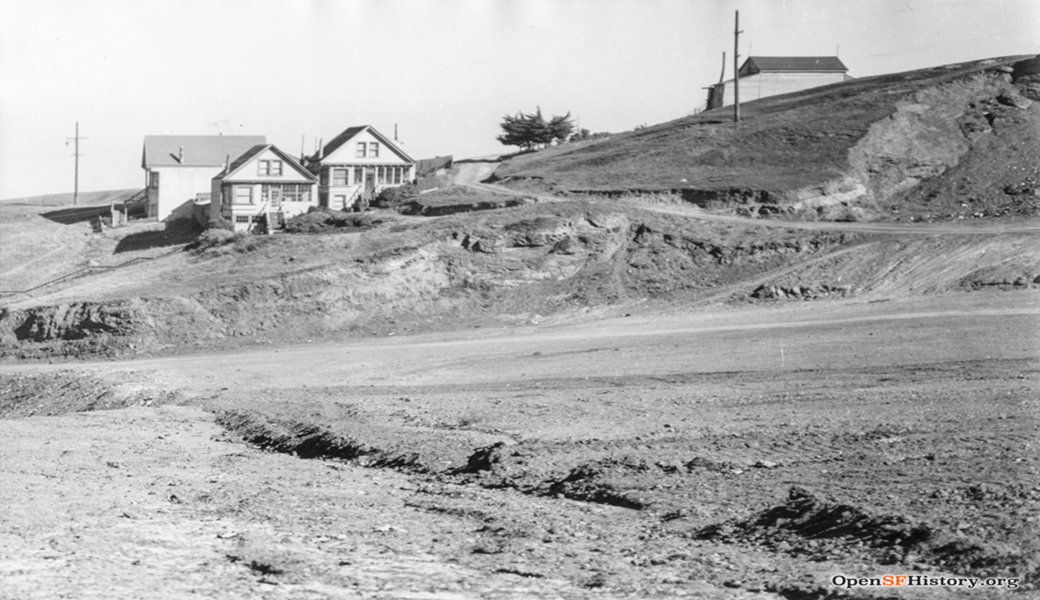
In the mid-1910s, the area of the subject property is illustrated on Sanborn Fire Insurance maps, but 27th Street was just a “paper street” at the time (it only existed on maps and not in reality) and was labeled “Steep Hill,” while Castro Street to the west was labeled “Impassible.” Only a few small cottages were scattered across the hillside, accessed by meandering unpaved roads and walking paths that seemed a world away from the strict city street grid that imposed order on adjacent areas of the neighborhood.
Looking east from 27th and Newburg Street in 1940. The future 27th Street would run into the distance at the far left.
The two houses facing the viewer are 1907 and 1913 Castro, while the one behind is 581 27th Street; all still extant.
About a six block area around the subject property remained without a graded street grid and with only scattered residential development into the late 1950s and early 1960s. By 1968, 27th Street was finally graded and paved east of Newburg Street, although its split grade and dead end continue to indicate how the steep terrain posed challenges to road and building construction.
Development of the block occurred very gradually, with multiple vacant lots remaining into the 1980s. The two properties at 555 and 557 27th Street were some of the last to be developed. They were built by the same builder, as evidenced in their identical facades and building foot prints. Condominium units in the buildings were first advertised for sale in May 1996, touting views and top quality new construction using marble and granite, with fireplaces, decks, and garages.
Illustration from a 2003 real estate listing in the San Francisco Chronicle.
In 1853, John Horner purchased the Rancho San Miguel from Jose de Jesus Noe and the blocks and streets of “Horner’s Addition to the City of San Francisco” were laid out, which included a large area around the subject property. The ebbing of the gold Rush and resulting Panic of 1854 forced Horner to give up his land and Horner’s Addition became the property of Augustine Alviso. In 1895, Noe’s descendants contested ownership of the Rancho San Miguel property, claiming that they had rights to half of the land as inheritance, but their claim was proven untenable.
With ownership issues resolved, Noe Valley began to develop, changing from a sparsely populated area comprised of small farms and dairies to a more densely developed neighborhood in the 1880s and 1890s. The opening of the Castro Street branch of the Market Street Cable Railway in 1887, made the neighborhood more accessible and desirable as a working class residential area. Many of the rather modest houses in Noe Valley were constructed by local carpenter-builders.
Noe Valley was not substantially impacted by the 1906 Earthquake and the resulting fires did not spread to the area. The nearly self-sufficient neighborhood provided water, food, and shelter to earthquake refugees from other parts of San Francisco. After the earthquake, the neighborhood experienced a surge of growth as the city’s displaced population settled in the undamaged area.
Local transportation systems advanced in tandem with Noe Valley’s growing population. In the 1890s, a railroad was constructed that ran from San Francisco to San Mateo, providing transportation from Eureka Valley to points south, along the Peninsula. Sparked by the development which followed the Earthquake of 1906, operation of the J Streetcar began in 1917 and the Twin Peak Tunnel opened in 1918, making Noe Valley an integral part of the city.
From Noe Valley’s initial development at the turn of the century, to the present day, it has been characterized as a residential village within the larger city of San Francisco. Construction thrived in the neighborhood from 1906 to World War II as houses, flats, and storefronts were built in response to the influx of working people to the area. After the Depression, and again after World War II, many families divided their single-family homes into multiple-family dwellings, with extra units that could be rented out. As the number of commercial businesses on the 24th Street corridor increased, the cost of rent in the area also increased.
Starting in the 1960s, Dolores Park and the surrounding neighborhood became one of the many foci in San Francisco for cultural, political and recreational activities. The neighborhood continued to be an immigrant and second-generation American community as cultural and ethnic groups shifted within the City. The adjacent Mission District saw an influx of the Latino community, Eureka Valley continued to support large populations of Irish and Scandinavians, while the Castro became known for its LGBTQ demographic. Noe Valley, reflected a little of each of these surrounding influences; however it also developed its own identity. A 1970 article in the San Francisco Examiner noted that the character of Noe Valley had changed as young, single professionals moved to the area and as it became heavily populated by renters rather than working class home owners. Today, the neighborhood is known as a quiet but vibrant area popular with young families.
557 27th Street
In the mid-1910s, the area of the subject property is illustrated on Sanborn Fire Insurance maps, but 27th Street was just a “paper street” at the time (it only existed on maps and not in reality) and was labeled “Steep Hill,” while Castro Street to the west was labeled “Impassible.” Only a few small cottages were scattered across the hillside, accessed by meandering unpaved roads and walking paths that seemed a world away from the strict city street grid that imposed order on adjacent areas of the neighborhood.
Looking east from 27th and Newburg Street in 1940. The future 27th Street would run into the distance at the far left.
The two houses facing the viewer are 1907 and 1913 Castro, while the one behind is 581 27th Street; all still extant.
About a six block area around the subject property remained without a graded street grid and with only scattered residential development into the late 1950s and early 1960s. By 1968, 27th Street was finally graded and paved east of Newburg Street, although its split grade and dead end continue to indicate how the steep terrain posed challenges to road and building construction.
Development of the block occurred very gradually, with multiple vacant lots remaining into the 1980s. The two properties at 555 and 557 27th Street were some of the last to be developed. They were built by the same builder, as evidenced in their identical facades and building foot prints. Condominium units in the buildings were first advertised for sale in May 1996, touting views and top quality new construction using marble and granite, with fireplaces, decks, and garages.
Illustration from a 2003 real estate listing in the San Francisco Chronicle.
Property Tour
3D Virtual Tour
Floor Plans
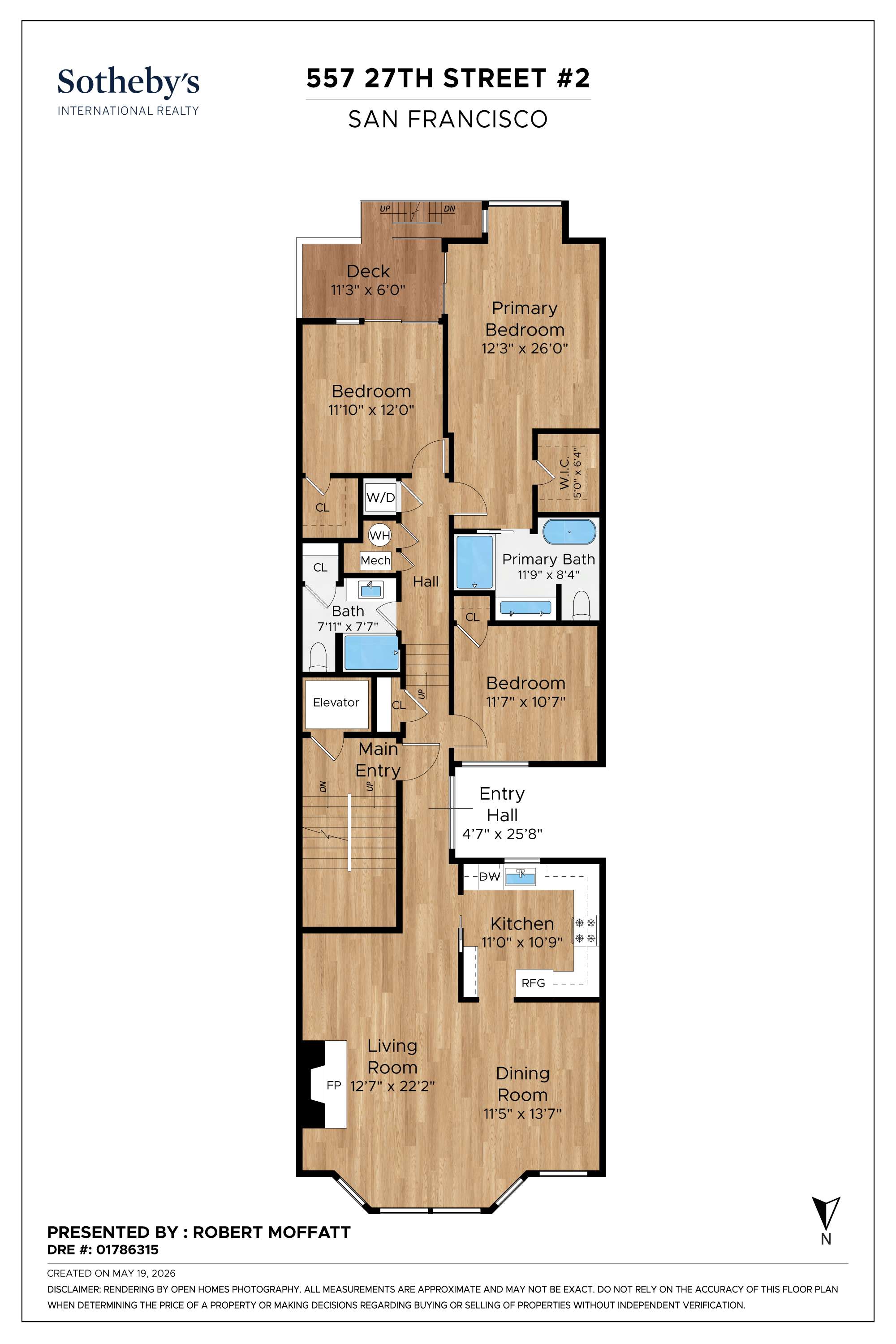
Floor plan
Brochure
Robert Moffatt
#1 Listing Agent Richmond District
Recent Listings
Schedule
There are no upcoming events.
Get In Touch
Thank you!
Your message has been received. We will reply using one of the contact methods provided in your submission.
Sorry, there was a problem
Your message could not be sent. Please refresh the page and try again in a few minutes, or reach out directly using the agent contact information below.
Robert Moffatt