
Presented by Jason Hoffman
Telegraph Hill Residence with Exceptional Views
455 Vallejo Street #204, San Francisco
|$1,505,000
All Property Photos
Property Details
Bedrooms
2
Bathrooms
2
Square Feet
1,046 sq ft
Neighborhood
Telegraph Hill
THE CITY, FRAMED
An elevated two-bedroom Telegraph Hill residence with panoramic views of the Bay Bridge and downtown skyline
Perched at the crest of Vallejo Street where a private cul-de-sac meets the historic Vallejo Steps, #204 is one of only two two-bedroom, two-bath floor plans in the building outside the penthouse level.
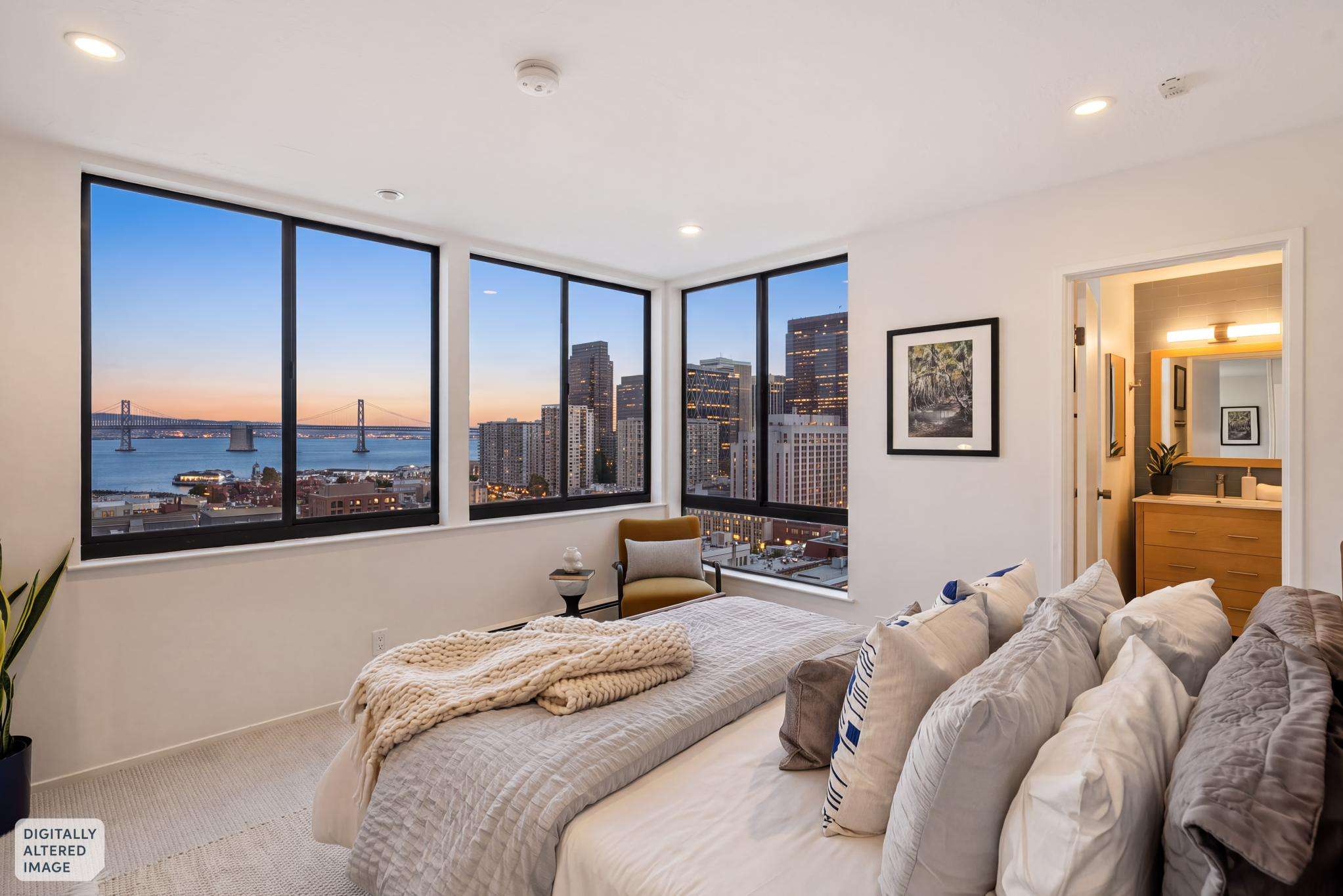
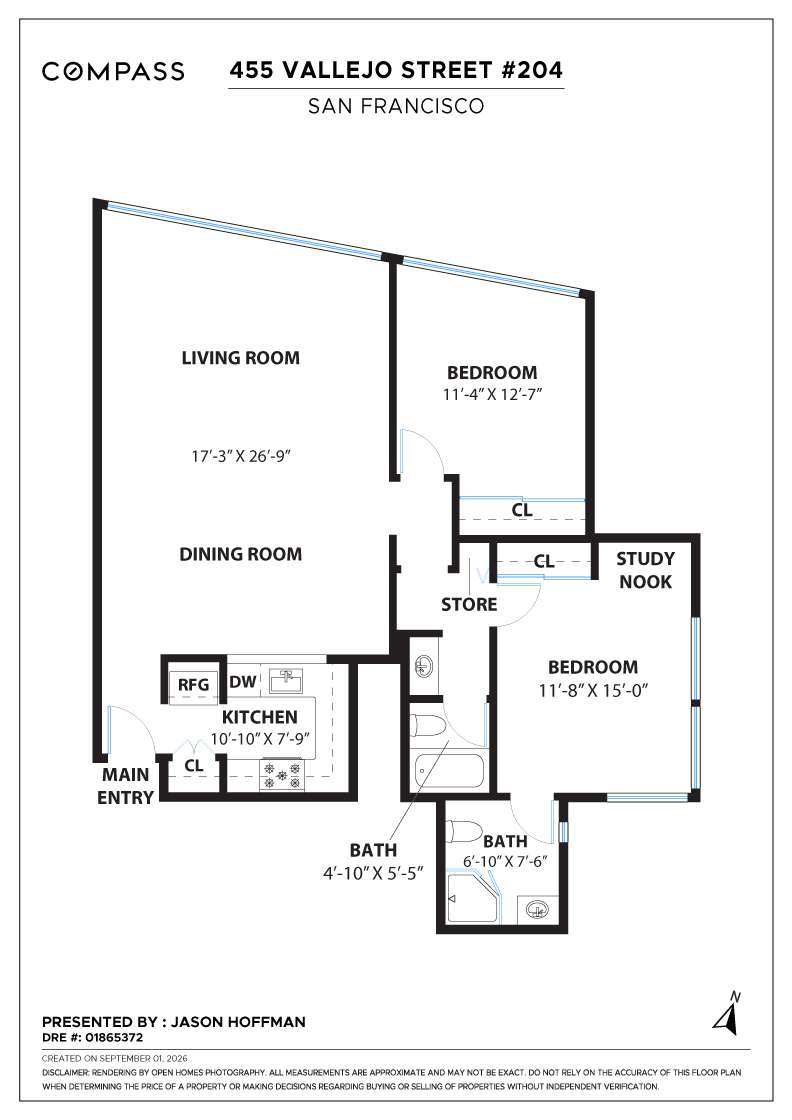
A quiet corner entrance opens to a grand living space with a confident mid-century sensibility: light-filled, well-proportioned, and sized for real entertaining. The open kitchen carries abundant wood cabinetry, granite counters, a Dacor oven, and a Bosch dishwasher. The en suite primary bedroom captures direct views of the Bay Bridge and the East Bay hills from both the bedroom and the bathroom. The guest bedroom looks out to Coit Tower and is served by a second full bathroom. Both bedrooms accommodate a king size bed. Bathrooms are refinished with a modern elegance.
The building is quiet and secure. Amenities include an elevator to all floors, a community room with expansive views and a large deck, a serene garden, BBQ, and a modern common laundry room. Completing this special offering is deeded garage parking with an electric-car charger and a private storage locker.
Walkability defines this residence. With a Walk Score of 100, North Beach’s cafés and restaurants are right outside your door. Chinatown, Jackson Square, now at the heart of San Francisco’s AI corridor, and the Embarcadero and Ferry Building are all within easy reach. The nearby Muni T line provides convenient access to Oracle Park and Chase Center.
A quiet corner entrance opens to a grand living space with a confident mid-century sensibility: light-filled, well-proportioned, and sized for real entertaining. The open kitchen carries abundant wood cabinetry, granite counters, a Dacor oven, and a Bosch dishwasher. The en suite primary bedroom captures direct views of the Bay Bridge and the East Bay hills from both the bedroom and the bathroom. The guest bedroom looks out to Coit Tower and is served by a second full bathroom. Both bedrooms accommodate a king size bed. Bathrooms are refinished with a modern elegance.
The building is quiet and secure. Amenities include an elevator to all floors, a community room with expansive views and a large deck, a serene garden, BBQ, and a modern common laundry room. Completing this special offering is deeded garage parking with an electric-car charger and a private storage locker.
Walkability defines this residence. With a Walk Score of 100, North Beach’s cafés and restaurants are right outside your door. Chinatown, Jackson Square, now at the heart of San Francisco’s AI corridor, and the Embarcadero and Ferry Building are all within easy reach. The nearby Muni T line provides convenient access to Oracle Park and Chase Center.
Property Tour
3D Virtual Tour
Floor Plan
Floor plan
Explore the Neighborhood
The hill that watched the ships come in.
Before it had an English name, it was Loma Alta. In 1849, a semaphore went up on the crest, signaling the name and cargo of ships entering the Golden Gate to merchants waiting below. It was an early information network for a city transforming almost overnight, and it gave Telegraph Hill its name. Gold Rush arrivals, followed by generations of Irish and Italian families, built cottages along the slopes within walking distance of the wharves. Quarrymen cut into the eastern face for ballast and paving stone, carving the dramatic cliff that still rises above the waterfront.
In April 1906, the great fire climbed the hill and stopped. Residents fought to save their homes, and much of the crest survived. The result is an extraordinary concentration of pre-earthquake houses, cottages, narrow lanes, stair streets, and irregular parcels that still give Telegraph Hill the scale and texture of a village.
At the summit stands Coit Tower, built with funds left to San Francisco by Lillie Hitchcock Coit and completed in 1933. Its celebrated Depression-era murals followed the next year. Below, the Filbert and Greenwich Steps descend through gardens and hillside cottages, including the Grace Marchant Garden, while the wild cherry-headed conures that have made the hill their home add another distinctly San Francisco chapter to its history.
The scarcity here is deliberate. Since its founding in 1954, the Telegraph Hill Dwellers have fought to preserve the hill's architecture, open space, waterfront, and low-rise character. Decades of preservation and tight development controls have left a neighborhood where the historic fabric remains remarkably intact and the skyline stays low, protecting much of the openness, light, and extraordinary outlooks that define the hill: the Bay, Bay Bridge, Alcatraz, and the East Bay beyond.
For all its sense of remove, Telegraph Hill sits in the middle of the city. North Beach cafes and restaurants, Chinatown, Jackson Square galleries, the Embarcadero, Ferry Building, and Financial District are all within walking distance. Yet climb back above the waterfront and the city begins to fall away: traffic thins, streets narrow, gardens appear between buildings, and stairways replace roads. San Francisco continues to reinvent itself below. Telegraph Hill has spent generations resisting that impulse. That is precisely the point.
Before it had an English name, it was Loma Alta. In 1849, a semaphore went up on the crest, signaling the name and cargo of ships entering the Golden Gate to merchants waiting below. It was an early information network for a city transforming almost overnight, and it gave Telegraph Hill its name. Gold Rush arrivals, followed by generations of Irish and Italian families, built cottages along the slopes within walking distance of the wharves. Quarrymen cut into the eastern face for ballast and paving stone, carving the dramatic cliff that still rises above the waterfront.
In April 1906, the great fire climbed the hill and stopped. Residents fought to save their homes, and much of the crest survived. The result is an extraordinary concentration of pre-earthquake houses, cottages, narrow lanes, stair streets, and irregular parcels that still give Telegraph Hill the scale and texture of a village.
At the summit stands Coit Tower, built with funds left to San Francisco by Lillie Hitchcock Coit and completed in 1933. Its celebrated Depression-era murals followed the next year. Below, the Filbert and Greenwich Steps descend through gardens and hillside cottages, including the Grace Marchant Garden, while the wild cherry-headed conures that have made the hill their home add another distinctly San Francisco chapter to its history.
The scarcity here is deliberate. Since its founding in 1954, the Telegraph Hill Dwellers have fought to preserve the hill's architecture, open space, waterfront, and low-rise character. Decades of preservation and tight development controls have left a neighborhood where the historic fabric remains remarkably intact and the skyline stays low, protecting much of the openness, light, and extraordinary outlooks that define the hill: the Bay, Bay Bridge, Alcatraz, and the East Bay beyond.
For all its sense of remove, Telegraph Hill sits in the middle of the city. North Beach cafes and restaurants, Chinatown, Jackson Square galleries, the Embarcadero, Ferry Building, and Financial District are all within walking distance. Yet climb back above the waterfront and the city begins to fall away: traffic thins, streets narrow, gardens appear between buildings, and stairways replace roads. San Francisco continues to reinvent itself below. Telegraph Hill has spent generations resisting that impulse. That is precisely the point.
Schedule
Upcoming Events
Jason Hoffman
Recent Listings
Get in Touch
Thank you!
Your message has been received. We will reply using one of the contact methods provided in your submission.
Sorry, there was a problem
Your message could not be sent. Please refresh the page and try again in a few minutes, or reach out directly using the agent contact information below.
Jason Hoffman