
Kevin McCollom Presents
4BD/3BA Brand New Construction Designer Home
235 Wilde Avenue, San Francisco
|$1,988,000
All Property Photos
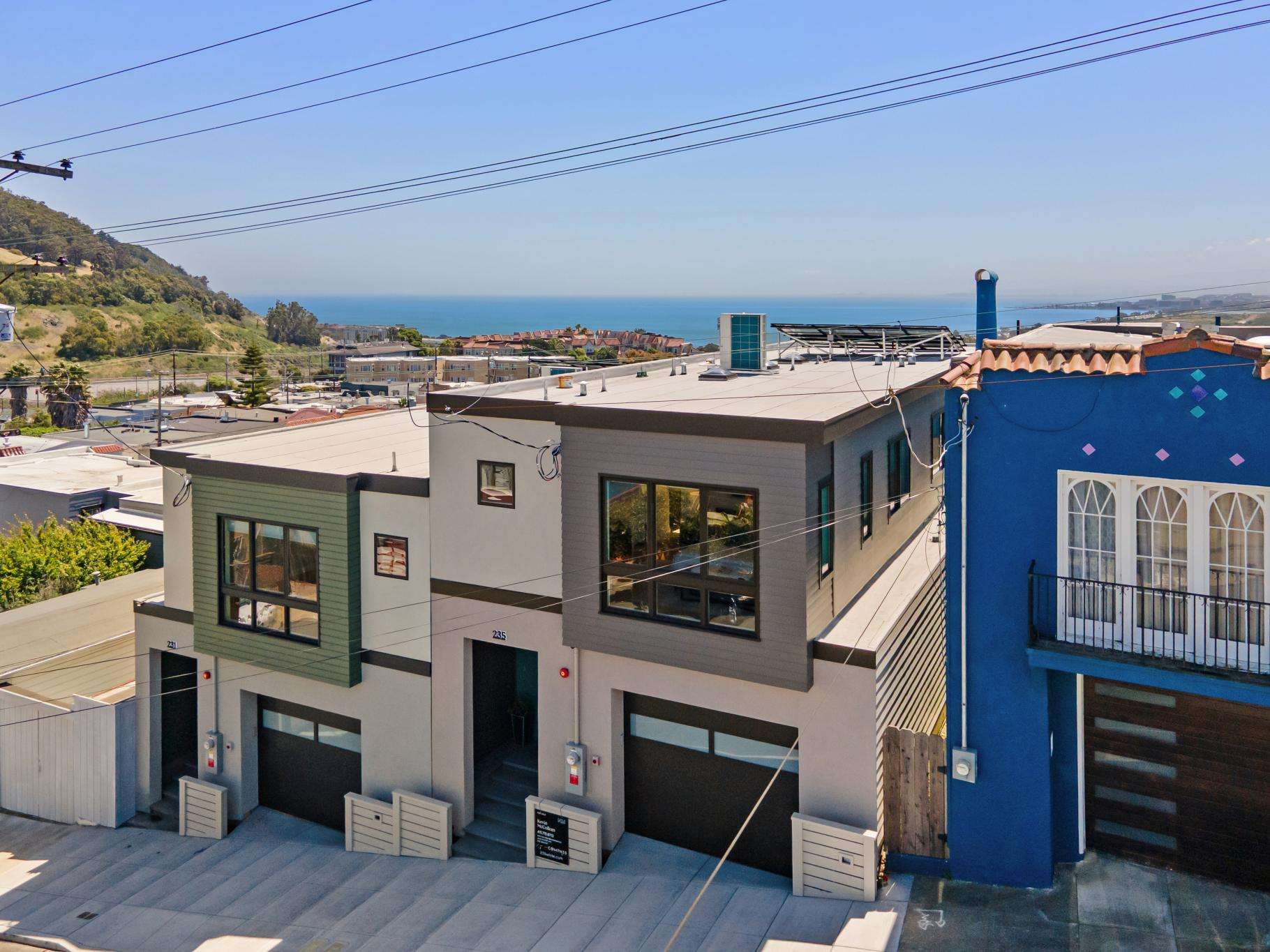
Introducing a truly exceptional offering in San Francisco. This brand new construction 4-bed, 3-bath Single-Family home blends contemporary design, functional living, and breathtaking views.
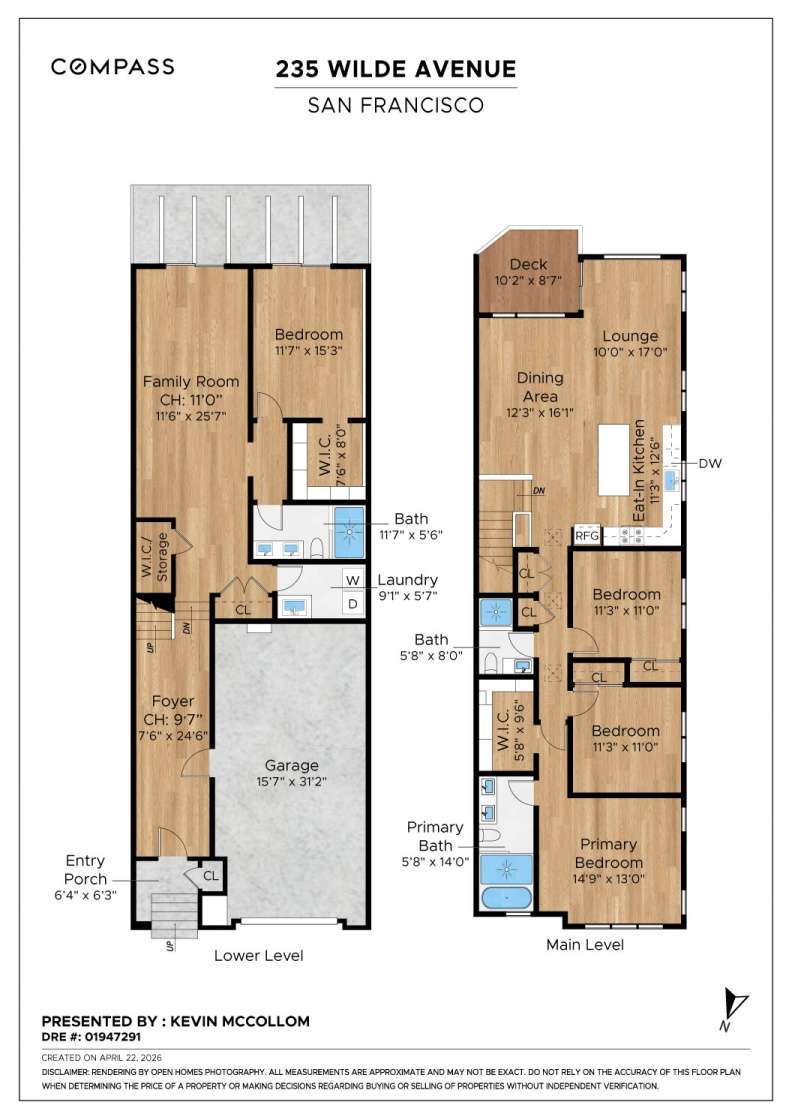
Thoughtfully designed for today’s lifestyle, the main level features three spacious bedrooms, including a generously sized primary suite with a large walk-in closet and a beautifully appointed en-suite bath. The open-concept living, dining, and kitchen areas serve as the heart of the home. Flooded with natural light and effortlessly extending to a south-facing covered deck, ideal for indoor-outdoor living, all set against stunning bay views. The chef’s kitchen is both striking and functional, showcasing premium appliances, a quartz waterfall island, and a layout designed for gathering.
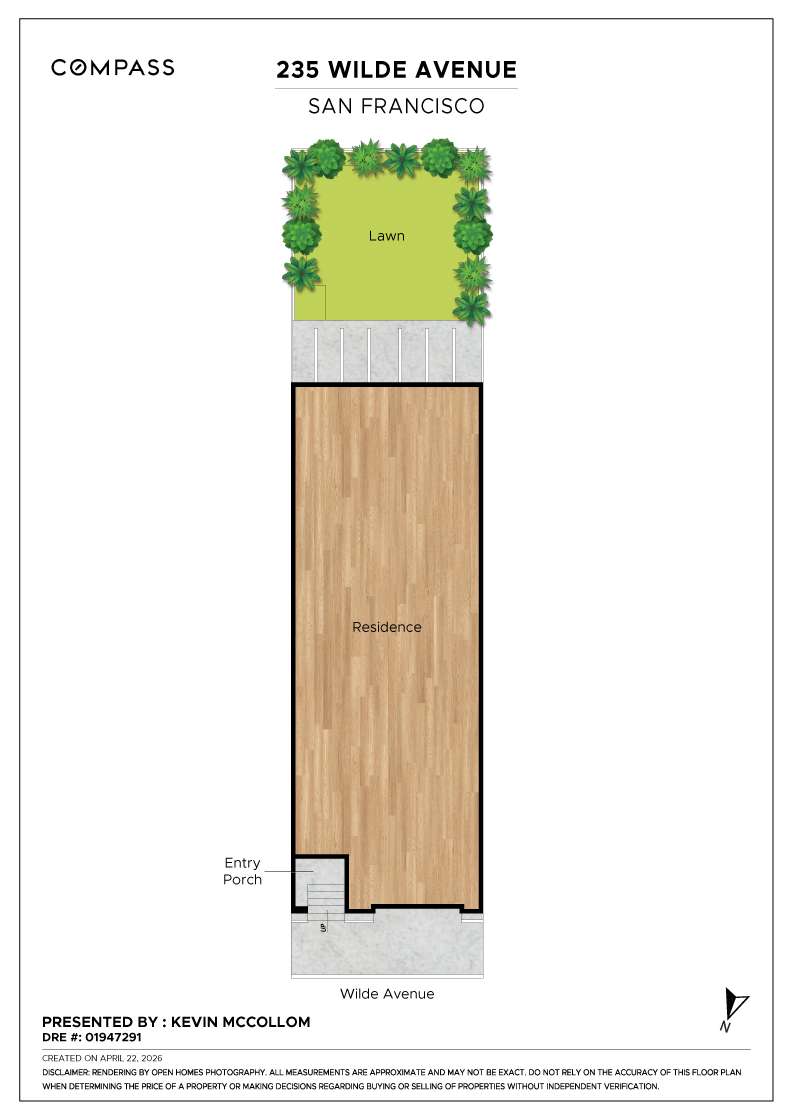
The lower level boasts impressive 11-foot ceilings and a spacious secondary living area—perfect as a media room, family room, or guest retreat. A large fourth bedroom with a walk-in closet, a separate full bathroom, and a dedicated laundry room with a washer and dryer complete this level. Sliding doors from both rooms open directly to a beautifully designed outdoor space featuring a level patio, flat turf yard, and lush landscaping.
Thoughtfully designed for today’s lifestyle, the main level features three spacious bedrooms, including a generously sized primary suite with a large walk-in closet and a beautifully appointed en-suite bath. The open-concept living, dining, and kitchen areas serve as the heart of the home. Flooded with natural light and effortlessly extending to a south-facing covered deck, ideal for indoor-outdoor living, all set against stunning bay views. The chef’s kitchen is both striking and functional, showcasing premium appliances, a quartz waterfall island, and a layout designed for gathering.
The lower level boasts impressive 11-foot ceilings and a spacious secondary living area—perfect as a media room, family room, or guest retreat. A large fourth bedroom with a walk-in closet, a separate full bathroom, and a dedicated laundry room with a washer and dryer complete this level. Sliding doors from both rooms open directly to a beautifully designed outdoor space featuring a level patio, flat turf yard, and lush landscaping.
Property Details
Bedrooms
0
Bathrooms
1
Square Feet
882 sq ft
Neighborhood
Portola, San Francisco
Property Tour
3D Virtual Tour
Floor Plans
Floor plan
Site plan
Neighborhood
Portola is a residential neighborhood located in the southeastern part of San Francisco. It's bounded by Silver Avenue to the north, San Bruno Avenue to the east, Mansell Street to the south, and McLaren Park to the west.
The neighborhood's name comes from the old Portola School, which was named after Gaspar de Portolà, the Spanish explorer who led the first European land expedition to northern California in 1769.
The main commercial corridor of Portola is San Bruno Avenue, which features local businesses, restaurants, and shops. This street serves as the neighborhood's primary hub for community activity and commerce.
Public transportation in Portola is primarily served by Muni bus lines. The neighborhood is also relatively close to the Glen Park BART station, providing broader access to the Bay Area.
Portola's architecture is characterized by a mix of housing styles. Many homes in the area were built in the 1920s and 1930s, featuring California bungalow and Mediterranean revival styles. The neighborhood also includes some mid-century homes and newer developments. Most residences are single-family houses, but there are also some small apartment buildings and duplexes.
Portola is considered a good place to live for several reasons. It offers a relatively affordable housing option in San Francisco's expensive real estate market. The neighborhood has a strong sense of community, with many long-time residents and families. It's known for its cultural diversity, which is reflected in its local businesses and community events.
One of Portola's notable features is its history of greenhouse farming. While most of the greenhouses are now gone, this legacy is celebrated in the neighborhood's unofficial title as "San Francisco's Garden District." The area still maintains several community gardens and green spaces.
McLaren Park, one of San Francisco's largest parks, borders Portola to the west, providing residents with easy access to extensive recreational facilities, including hiking trails, playgrounds, and a golf course.
The neighborhood offers a quieter, more suburban feel compared to more central parts of San Francisco, while still providing relatively easy access to downtown and other city amenities.
The neighborhood's name comes from the old Portola School, which was named after Gaspar de Portolà, the Spanish explorer who led the first European land expedition to northern California in 1769.
The main commercial corridor of Portola is San Bruno Avenue, which features local businesses, restaurants, and shops. This street serves as the neighborhood's primary hub for community activity and commerce.
Public transportation in Portola is primarily served by Muni bus lines. The neighborhood is also relatively close to the Glen Park BART station, providing broader access to the Bay Area.
Portola's architecture is characterized by a mix of housing styles. Many homes in the area were built in the 1920s and 1930s, featuring California bungalow and Mediterranean revival styles. The neighborhood also includes some mid-century homes and newer developments. Most residences are single-family houses, but there are also some small apartment buildings and duplexes.
Portola is considered a good place to live for several reasons. It offers a relatively affordable housing option in San Francisco's expensive real estate market. The neighborhood has a strong sense of community, with many long-time residents and families. It's known for its cultural diversity, which is reflected in its local businesses and community events.
One of Portola's notable features is its history of greenhouse farming. While most of the greenhouses are now gone, this legacy is celebrated in the neighborhood's unofficial title as "San Francisco's Garden District." The area still maintains several community gardens and green spaces.
McLaren Park, one of San Francisco's largest parks, borders Portola to the west, providing residents with easy access to extensive recreational facilities, including hiking trails, playgrounds, and a golf course.
The neighborhood offers a quieter, more suburban feel compared to more central parts of San Francisco, while still providing relatively easy access to downtown and other city amenities.
Kevin McCollom
Recent Listings
Schedule
Upcoming Events
Get In Touch
Thank you!
Your message has been received. We will reply using one of the contact methods provided in your submission.
Sorry, there was a problem
Your message could not be sent. Please refresh the page and try again in a few minutes, or reach out directly using the agent contact information below.
Kevin McCollom