B.G. Bates Presents
Historic Offering in Bolinas
∎
$3,450,000
5 Lauff Ranch Road, Bolinas
Property Details
∎
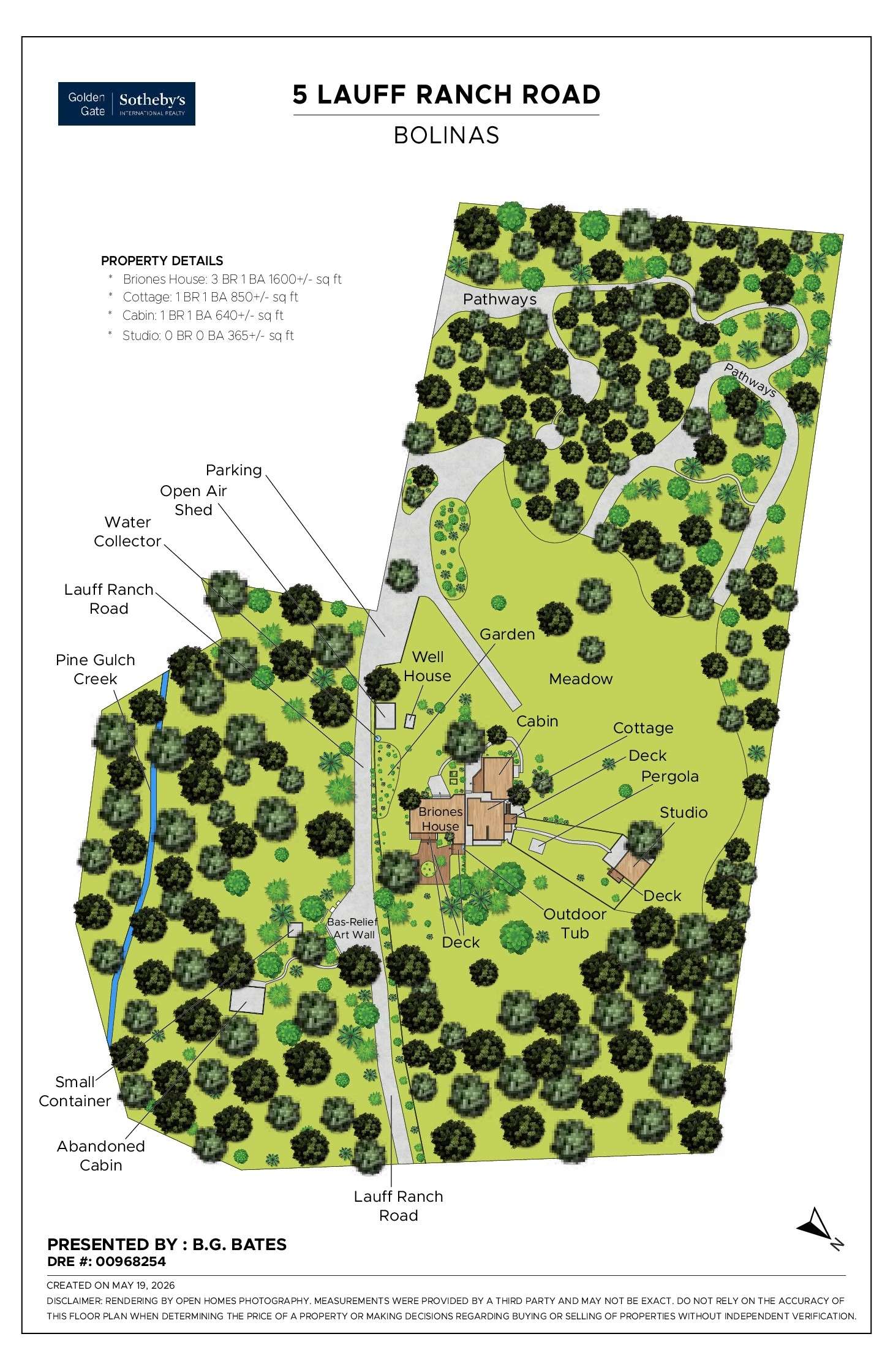
Briones house
3 BR 1 BA | 1600+/- sq ft
Cottage
1 BR 1 BA | 850+/- sq ft
Cabin
1 BR 1 BA | 640+/- sq ft
Studio
1 BR 0 BA | 365+/- sq ft
Oldest house
on Marin Coast
∎
Historic Briones home
on Rancho Las Baulines
on Rancho Las Baulines
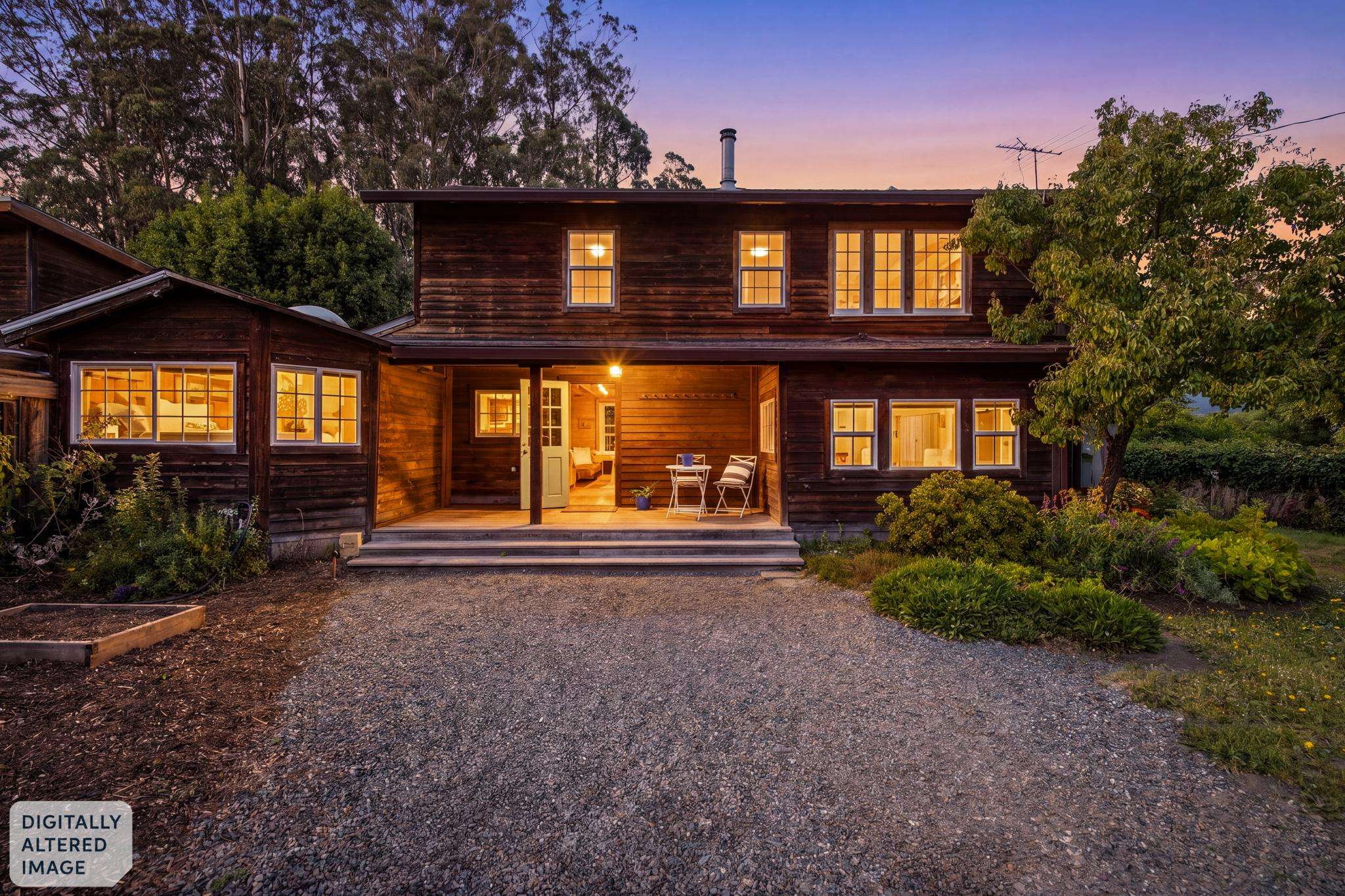
The oldest house in Bolinas is available for the first time in 55 years. Believed to be the oldest residence on the Marin coast, this amazing structure sits on 7.5 acres in the temperate Horseshoe Hill neighborhood. It was built with old growth redwood harvested from the primeval forest in nearby future Dogtown about 175 years ago. Pine Gulch Creek winds through the property as native vegetation lines its perimeter; a central meadow offers a gentle rise capturing an ocean water glimpse.
Holding a rare use permit for three residences, the property is replete with possibilities. In addition to the original Briones House, there’s a rustic Cabin and a two-story one-bedroom Cottage and another two-room Studio. This is an idyllic multi-residence retreat.
In exchange for logging rights on Rancho Las Baulines - former land of the indigenous Coast Miwok people - early lumberjacks built the house for rancho-owner Gregoria Briones and his wife Ramona Garcia. With only three major owners in its some 175+/- years, this home and property are ready for the next stewards of an enchanting Bolinas original.
Holding a rare use permit for three residences, the property is replete with possibilities. In addition to the original Briones House, there’s a rustic Cabin and a two-story one-bedroom Cottage and another two-room Studio. This is an idyllic multi-residence retreat.
In exchange for logging rights on Rancho Las Baulines - former land of the indigenous Coast Miwok people - early lumberjacks built the house for rancho-owner Gregoria Briones and his wife Ramona Garcia. With only three major owners in its some 175+/- years, this home and property are ready for the next stewards of an enchanting Bolinas original.
All Property Photos
∎
History
∎
First residence in future Bolinas
This home is the oldest and most significantly historic house in Bolinas and perhaps in all coastal Marin. It was the heart of Rancho Las Baulines and anchored this area as the site of the future town of Bolinas. Here, the indigenous Coast Miwok settled on the warm, sheltered flatland by a freshwater creek, where the Bolinas-Stinson School is today, and back into Paradise Valley. The Spanish colonial missionaries recorded the name of their village as Gualenes. Later, it would appear as Baulines, then simplified to Bolinas.
When Alta California became part of Mexico, vast land grants were given out. Rafael Garcia received the splendid Rancho Tomales Y Baulines. It encompassed the land from the south end of today’s Stinson Beach, all of Bolinas, and up the Olema Valley. In about 1834, when Garcia and his family arrived as the first non-indigenous settlers of coastal Marin, they chose to make their home on Gualenes land. The site of the Weston’s house today.
In 1837, the Garcia family moved north to start a rancho near Olema and gave the southern section of their land, Rancho Las Baulines, to Garcia’s sister Ramona and brother-in-law Gregorio Briones. The Briones family moved to Garcia’s homestead, and the boundaries of this ranch defined Bolinas for decades. (Gregorio’s parents were among the small group of Spanish colonial settlers who established what would become the city of San Francisco.) Rancho Las Baulines prospered. It was a time of leisure, hospitality, and friendships with other settlers of Marin County.
But everything changed with the discovery of gold in California. Thousands of immigrants poured into the little village of San Francisco, creating an urgent need for piers, lumber, firewood, and food. In the autumn of 1849, a group of men came to Gregorio to make a deal to log the primeval redwood forests in the northern area of Rancho Las Baulines. As part of the agreement, they built the large wooden house for the Briones family, today with the address 5 Lauff Ranch Road. As logging began, hundreds of men invaded the land. Sawmills and a rowdy little settlement of houses and businesses sprang up. It was the northern entrance to the rancho, so they called the settlement Baulines, which later became known as Dogtown. This was the first iteration of the town of Bolinas. By the late 1870s, the land around the Briones homestead developed with a school, several businesses, houses, three churches, and the Druids Hall. Gregorio and Ramona’s three daughters and two sons married and created ranches and influential families. Gregorio died in 1863. Lauff Ranch road is named for Charles Lauff and family. He played many roles in early Bay Area history and married the Briones daughter Maria.
In 1911, when the Millers bought the Briones’ homestead, the house had long been abandoned. The Millers were a prominent family among the earliest settlers of Marin County. This Miller couple had recently returned to San Rafael from Alaska’s Yukon gold rush and wanted a weekend home. They brought the homestead back to life. Their son, George Scott Miller, was an artist whose work is in the Bolinas Museum Permanent Collection. Their son Bill married Violette Petar, daughter of Louis Petar, captain of the much-storied boat Owl. One of Bill and Violet’s daughters was Marji Miller de Greeve, who helped to develop the Bolinas Museum.
The most recent owner, Judith (Hawk) Weston who purchased the property in 1971, was a remarkable woman and a dynamic character of many talents. This uniquely historic house holds a rich and important story in Bolinas and coastal Marin.
-Elia Haworth
Curator of History and Collections
Bolinas Museum
When Alta California became part of Mexico, vast land grants were given out. Rafael Garcia received the splendid Rancho Tomales Y Baulines. It encompassed the land from the south end of today’s Stinson Beach, all of Bolinas, and up the Olema Valley. In about 1834, when Garcia and his family arrived as the first non-indigenous settlers of coastal Marin, they chose to make their home on Gualenes land. The site of the Weston’s house today.
In 1837, the Garcia family moved north to start a rancho near Olema and gave the southern section of their land, Rancho Las Baulines, to Garcia’s sister Ramona and brother-in-law Gregorio Briones. The Briones family moved to Garcia’s homestead, and the boundaries of this ranch defined Bolinas for decades. (Gregorio’s parents were among the small group of Spanish colonial settlers who established what would become the city of San Francisco.) Rancho Las Baulines prospered. It was a time of leisure, hospitality, and friendships with other settlers of Marin County.
But everything changed with the discovery of gold in California. Thousands of immigrants poured into the little village of San Francisco, creating an urgent need for piers, lumber, firewood, and food. In the autumn of 1849, a group of men came to Gregorio to make a deal to log the primeval redwood forests in the northern area of Rancho Las Baulines. As part of the agreement, they built the large wooden house for the Briones family, today with the address 5 Lauff Ranch Road. As logging began, hundreds of men invaded the land. Sawmills and a rowdy little settlement of houses and businesses sprang up. It was the northern entrance to the rancho, so they called the settlement Baulines, which later became known as Dogtown. This was the first iteration of the town of Bolinas. By the late 1870s, the land around the Briones homestead developed with a school, several businesses, houses, three churches, and the Druids Hall. Gregorio and Ramona’s three daughters and two sons married and created ranches and influential families. Gregorio died in 1863. Lauff Ranch road is named for Charles Lauff and family. He played many roles in early Bay Area history and married the Briones daughter Maria.
In 1911, when the Millers bought the Briones’ homestead, the house had long been abandoned. The Millers were a prominent family among the earliest settlers of Marin County. This Miller couple had recently returned to San Rafael from Alaska’s Yukon gold rush and wanted a weekend home. They brought the homestead back to life. Their son, George Scott Miller, was an artist whose work is in the Bolinas Museum Permanent Collection. Their son Bill married Violette Petar, daughter of Louis Petar, captain of the much-storied boat Owl. One of Bill and Violet’s daughters was Marji Miller de Greeve, who helped to develop the Bolinas Museum.
The most recent owner, Judith (Hawk) Weston who purchased the property in 1971, was a remarkable woman and a dynamic character of many talents. This uniquely historic house holds a rich and important story in Bolinas and coastal Marin.
-Elia Haworth
Curator of History and Collections
Bolinas Museum
A Bolinas Love Story
∎
Lauff Ranch
Maria de Jesus Ysidores Briones (1831-1894) and Charles Lauff ( 1822- 1917)
Maria Briones’ Spanish family settled Rancho Las Baulines in 1837, and her life was entwined with the birth of Bolinas. Charles Lauff arrived in future-San Francisco as a sailor in 1844. Resourceful and adventurous, he was a whaler, a logger, joined the gold rush, piloted boats, managed ranches in Marin and Mendicino, and was friends with the leading settlers of Marin County, including the Briones. Maria and Charles fell in love and planned to marry. But in 1846, when Charles went to fight the Spanish in the Mexican American War, her father ended their engagement.
Maria married Francisco Sebrean with a great celebration in 1850 that drew friends from all over the Bay Area to Rancho Las Baulines for the wedding. Charles came too, and wishing Maria happiness, he helped whipsaw lumber and built the area’s first wooden floor for the dancing. Maria’s life changed again when a terrible smallpox epidemic swept through, and despite her aunt Juana Briones de Miranda’s skillful nursing, Francisco died leaving Maria alone with their two children.
The love story of Maria and Charles came full circle in 1862 when they married and settled in Bolinas. They raised eleven children and helped the town develop. Lauff lived to be 95, and loved telling tales about the early days in Marin, his many friendships and his wife Maria.
-Elia Haworth
Curator of History and Collections
Bolinas Museum
Maria Briones’ Spanish family settled Rancho Las Baulines in 1837, and her life was entwined with the birth of Bolinas. Charles Lauff arrived in future-San Francisco as a sailor in 1844. Resourceful and adventurous, he was a whaler, a logger, joined the gold rush, piloted boats, managed ranches in Marin and Mendicino, and was friends with the leading settlers of Marin County, including the Briones. Maria and Charles fell in love and planned to marry. But in 1846, when Charles went to fight the Spanish in the Mexican American War, her father ended their engagement.
Maria married Francisco Sebrean with a great celebration in 1850 that drew friends from all over the Bay Area to Rancho Las Baulines for the wedding. Charles came too, and wishing Maria happiness, he helped whipsaw lumber and built the area’s first wooden floor for the dancing. Maria’s life changed again when a terrible smallpox epidemic swept through, and despite her aunt Juana Briones de Miranda’s skillful nursing, Francisco died leaving Maria alone with their two children.
The love story of Maria and Charles came full circle in 1862 when they married and settled in Bolinas. They raised eleven children and helped the town develop. Lauff lived to be 95, and loved telling tales about the early days in Marin, his many friendships and his wife Maria.
-Elia Haworth
Curator of History and Collections
Bolinas Museum
Spectacular acreage, three homes, and Pine Gulch Creek
Property Tour
∎
walkthrough
3D Virtual Tour
∎
Property Tour
∎
Floor Plans
∎
Bolinas
Neighborhood
∎
Known for its bohemian spirit and strong sense of community, Bolinas is a secluded seaside village in West Marin which offers a unique blend of natural beauty and artistic charm. Tucked away from the main highways, Bolinas is accessible via winding roads that contribute to its off-the-beaten-path allure. The town features quaint, eclectic homes, local art galleries, and cozy cafes. Its stunning beaches and tide pools attract surfers, beachcombers, and nature enthusiasts. Bolinas Lagoon and nearby Point Reyes National Seashore provide ample opportunities for birdwatching, hiking, and exploring diverse wildlife. With its laid-back atmosphere, scenic landscapes, and vibrant local culture, Bolinas is an incredibly peaceful retreat for those seeking a slower pace of life amidst California's coastal beauty.
B.G. Bates
Golden Gate Sotheby's International Realty
Realtor®
- DRE:
- #00968254
- Mobile:
- (415) 706-1026
BGBates.com
Global Real Estate Advisor
Recent Listings
∎
Schedule
∎
Upcoming Events
Get In Touch
∎
Thank you!
Your message has been received. We will reply using one of the contact methods provided in your submission.
Sorry, there was a problem
Your message could not be sent. Please refresh the page and try again in a few minutes, or reach out directly using the agent contact information below.
B.G. Bates
Golden Gate Sotheby's International Realty
Realtor®
- DRE:
- #00968254
- Mobile:
- (415) 706-1026